Last reviewed on May 07, 2026
How to Read Your Mammography Report
Your healthcare provider (usually a doctor, nurse practitioner, or physician assistant) sometimes uses medical imaging tests to diagnose and treat diseases. A radiologist is a doctor who supervises these exams, reads and interprets the images, and writes a report for your healthcare provider. This report may contain medical terms and complex information. Some medical terms may look concerning but may not be serious. Your doctor can explain any findings, many of which are commonly seen in many patients and will cause you no harm. If you have any questions, be sure to talk to your provider or ask if you can speak to a radiologist (not all imaging centers make their radiologists available for patient questions).
What is Mammography commonly used for?
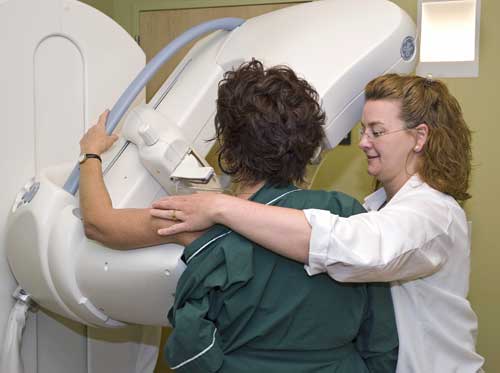
A mammogram is a specialized x-ray of the breast that helps your doctor screen for breast cancer and diagnose the cause of breast changes such as lumps, pain, nipple discharge, or changes in breast size or shape. Advances in mammography (such as digital mammography, computer-aided detection, and breast tomosynthesis) allow doctors to diagnose breast cancer early, often before you or your doctor can feel a lump, which is why regular screening mammograms are so important for breast health.For more information, see the Mammography page.
Sections of the Radiology Report
Your mammogram report is divided into different sections, including clinical history, comparison, technique, findings, and impressions. Each section contains different information.
Type of exam
This section usually shows the date, time, and type of exam. The type of exam is usually dictated by your symptoms or needs.
- Mammography performed January 10th, 2026.
Clinical History
This section usually lists the information that your ordering provider has provided for the radiologist when they ordered your exam. It allows your ordering provider to explain what symptoms you are having and why they are ordering the radiology test. This helps the radiologist accurately interpret your test and focus the report on your symptoms and past medical history. Sometimes the radiologist who reads your exam will also add information that they find in your chart or in any forms you fill out before your mammogram.
Example:
- 54-year-old female with a history of dense breasts and new breast lump.
Comparison/Priors
If you had mammograms before, the radiologist will compare them to the new mammogram. If so, the radiologist will list them here. It is always a good idea to get copies of previous mammograms from other hospitals/facilities and give them to the radiology department where you are having your test. Having these older exams can be very helpful to the radiologist. In some cases, simply having a copy of your prior exam available will make a difference in what the radiologist recommends, if they see something on your scan. The prior exam can help show if a previous finding is unchanged or if there is a new finding.
Example:
- Comparison is made to a mammogram performed August 24, 2024.
Technique
This section describes how the exam was done. Because this section is used for documentation purposes, it is not typically useful for you or your doctor. However, it can be very helpful to a radiologist for any necessary future exam.
Findings
The findings section lists what the radiologist saw on your mammogram. This may include descriptions of how dense the breast tissue is, whether there are any lumps, tiny calcium deposits (calcifications), changes in the breast’s structure or differences between the two breasts. Findings may be normal, abnormal but not likely to cause problems, or abnormal and may need further evaluation. It's important to know that dense breast tissue is very common and doesn't mean you have cancer, though it can make it harder to see lumps or other things. Sometimes calcifications are seen—these tiny calcium deposits are often benign, though some patterns of calcifications may require more imaging tests.
Many mammogram reports include a BI-RADS (Breast Imaging Reporting and Data System) category. BI-RADS is a way doctors describe what they see on breast imaging tests. It helps make reports clear and consistent, and it gives a sense of how concerned you and your doctor should be about what was found. Category 0 means the imaging test was incomplete and additional imaging tests are needed. Categories 1 and 2 are normal or benign findings that don’t need follow-up. Category 3 is probably benign and typically requires a short-term follow-up mammogram. Categories 4 and 5 are findings that may need a biopsy to determine if cancer is present. Your healthcare provider will explain your category and any recommended next steps.
Impressions
The impressions section summarizes the findings that the radiologist wants to make sure your doctor is aware of. It lists the radiologist's conclusions and includes the BI-RADS category along with clear recommendations. This might include continuing with routine annual screening, coming back in six months for a follow-up, or getting additional imaging tests such as an ultrasound or MRI. If a biopsy is recommended, remember that most breast biopsies do not find cancer.
Sometimes the report does not answer the clinical question, and more exams may be needed. More exams may be necessary to follow up on a suspicious or questionable finding.
Being called back for additional imaging tests is common—about 10% of women need additional views or an ultrasound, and the vast majority of these findings do not turn out to be cancer. Additional imaging simply means the radiologist wants a clearer picture to give you the most accurate results.
Additional Information
Once the report is complete, the radiologist signs it and sends the report to your doctor, who will then discuss the results with you. The doctor may upload the report to your patient portal before they call you. If you read the report before talking to your doctor, don’t make assumptions about the report’s findings. Something that seems to be bad often turns out not to be a cause for concern.
Remember: your mammogram report is written for your healthcare provider, and that can make it hard to understand. Write down any questions and concerns you may have and talk to your healthcare provider about any next steps. Your providers are your best resource for understanding what your results mean for you.